Ginomai γίνομαι (1096):
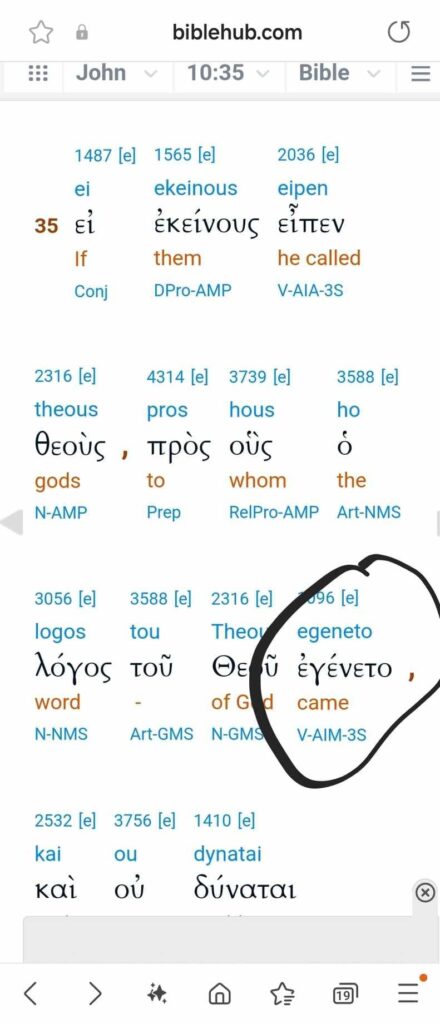
John 10:34-36
Jesus trả lời họ: “Chẳng phải trong luật pháp của các ngươi có chép, ‘Ta phán: các ngươi là các thần” sao? Nếu được gọi là thần, những kẻ có lời Thiên Chúa xảy đến cho – vả lại không thể hủy bỏ lời Kinh thánh thì sao người đã được Cha tác thánh và sai đến trong thế gian, các ngươi lại bảo: Ông phạm thượng! vì Ta đã nói: Ta là Con Thiên Chúa?
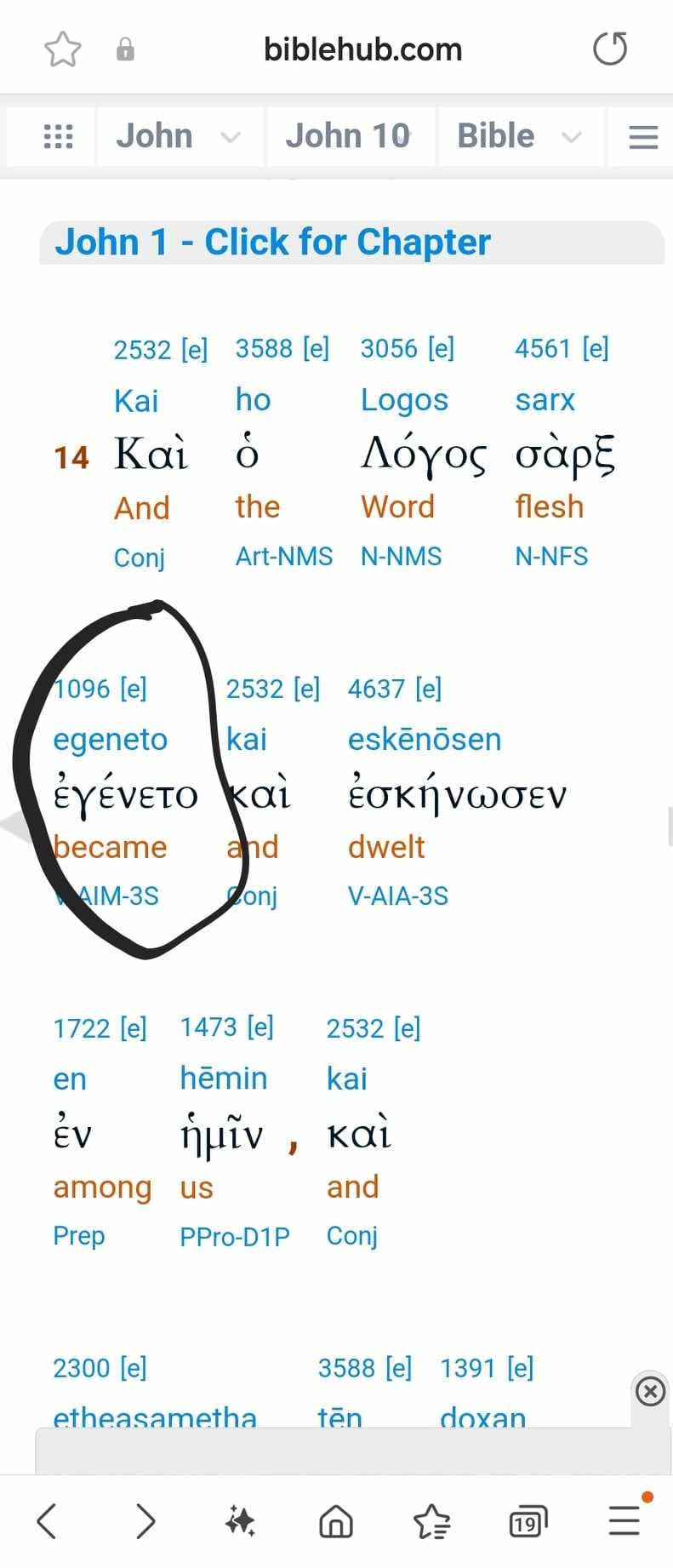
John 1:14
→ 2 câu John 10:35 và John 1:14 là 2 câu có chung 1 cấu trúc.
ENGLISH
The two words translated as “came / happened / became” in the two passages below
are actually the same word, yet no translation renders them the same way.
John 10:34–36
Jesus answered them:
“Is it not written in your Law, ‘I said, you are gods’?
If he called them gods to whom the word of God came (logos + ginomai)—and Scripture cannot be broken—
why do you say of the one whom the Father sanctified and sent into the world, ‘You are blaspheming,’ because I said, ‘I am the Son of God’?”
John 1:14
“And the Word came to / happened to flesh (logos + ginomai),
and tabernacled among us,
and we beheld His glory, glory as of the only Son from the Father,
full of grace and truth.”
→ John 10:35 and John 1:14 share the same structure:
logos + ginomai
If you read other translations, you will notice:
- John 1:14 is translated as “the Word became flesh” (incarnation),
- John 10:35 is translated as “the word of God came to them.”
Yet both passages use the same construction:
λόγος + γίνομαι (logos + ginomai).
What if we reverse the translation logic?
Then:
- The people in John 10:35 would be the ones in whom the Word became flesh,
- And Jesus would be the one to whom the Word of God came.
The question
Why is one and the same verb, in the same Johannine context, translated with two different meanings?
Which meaning is correct?
- If you translate ginomai as “became incarnate”,
then many “Words incarnate” have already come into the world (John 10:35). - If you translate it as “came / happened to”,
then Jesus did not incarnate as the Word,
but is a human being who received the Word.
In other words:
The Word is not Jesus.
And this meaning fits the entire flow of John 1
— if the passage is translated accurately.
- The Word of YHWH comes to humans
- The Word in the Gospel of John
- Sent → Word → god
Virgin birth, incarnation, Word, Son of David
👉 The issue is not theology first,
but translation consistency.
The same Greek construction (logos + ginomai)
cannot reasonably mean “incarnate” in one verse
and merely “came” in another—
unless interpretation has already been imposed on the text.